
Understanding how to manage HG treatment, cope with the effects of HG, and get help to survive HG are some of the greatest challenges those with HG face. The HER Foundation has been developing tools, collaborating on HG research, and supporting families since 2000. Find resources to share with doctor(s), friends, and family.
We are continually updating and adding new tools so bookmark this page. HER Foundation is working to improve the health of mothers and babies now and in the future. These tools are free to download for personal use. They may not be altered in any way or distributed for personal profit.
PATIENT HELP
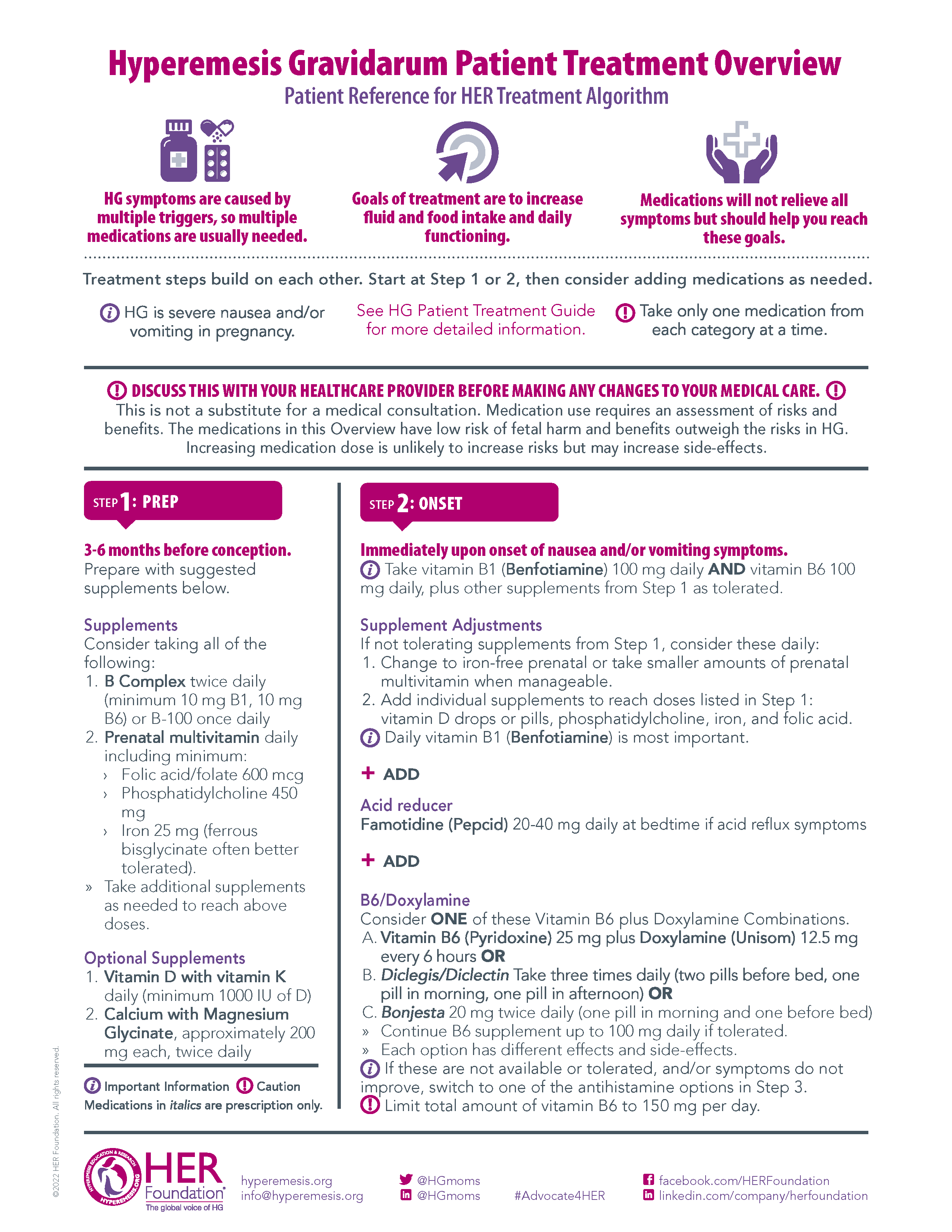
- Patient Treatment Guide *NEW* - Step by step guidance for the Algorithm.
- Patient Treatment Brochure (General Treatment Summary)
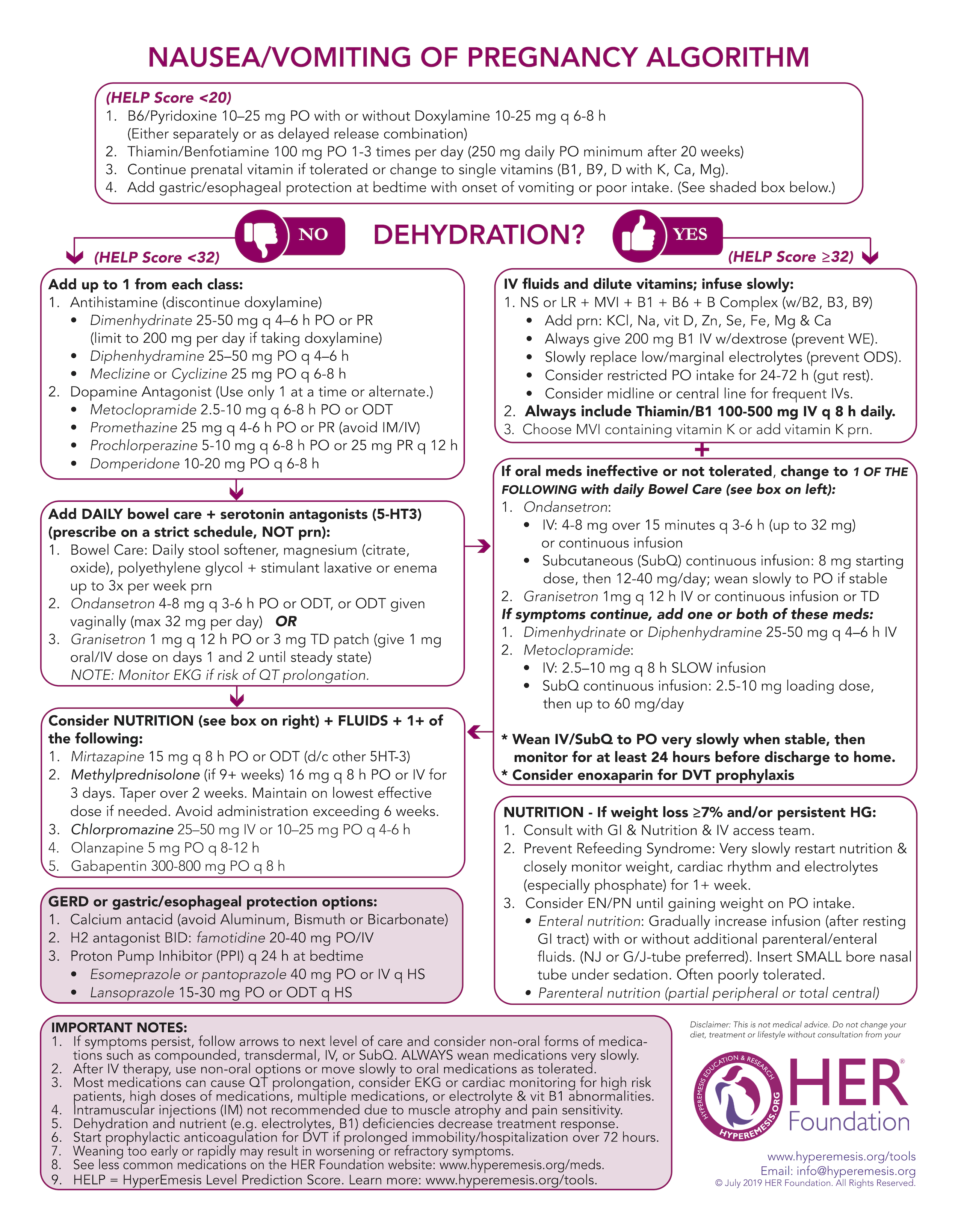
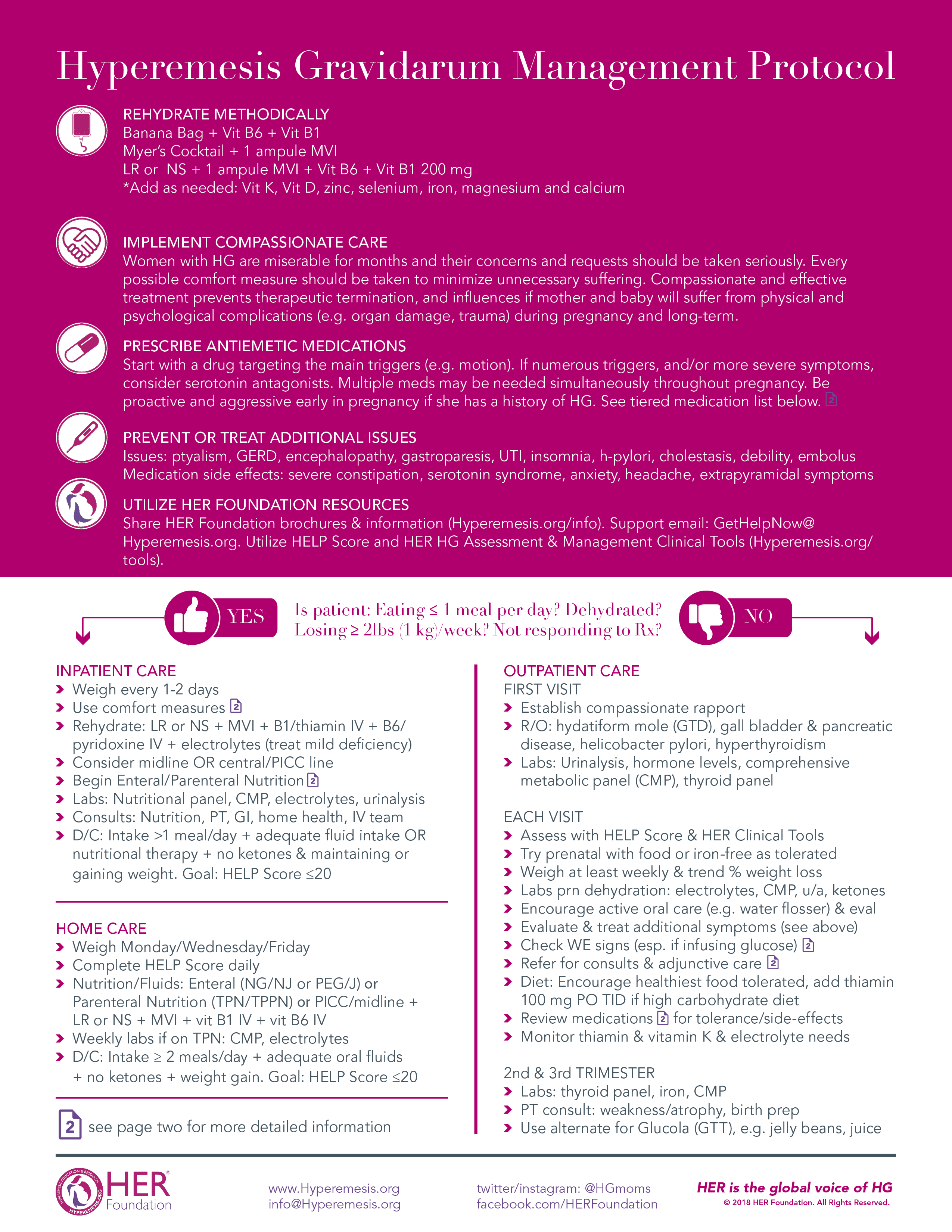
- Patient Treatment Protocol
- HELP Score (Español, Hebrew)
- Medication Strategies (Español, Italiano)
- FAQ's
OTHER INFO
- Zofran Statement Download (Fetal info, Maternal info)
- Infographics
- HER Advocacy Priorities
RESEARCH
- Research Abstract Summary
- Current Research Studies
- Read HER's full text research articles
HG Treatment Tools
Assessment Tools
Assessing these women can be difficult due to the fluctuations in symptom severity and complexity of their symptoms. Thus, the HER Foundation developed important tools to help you effectively and efficiently evaluate HG patients.
HELP Score
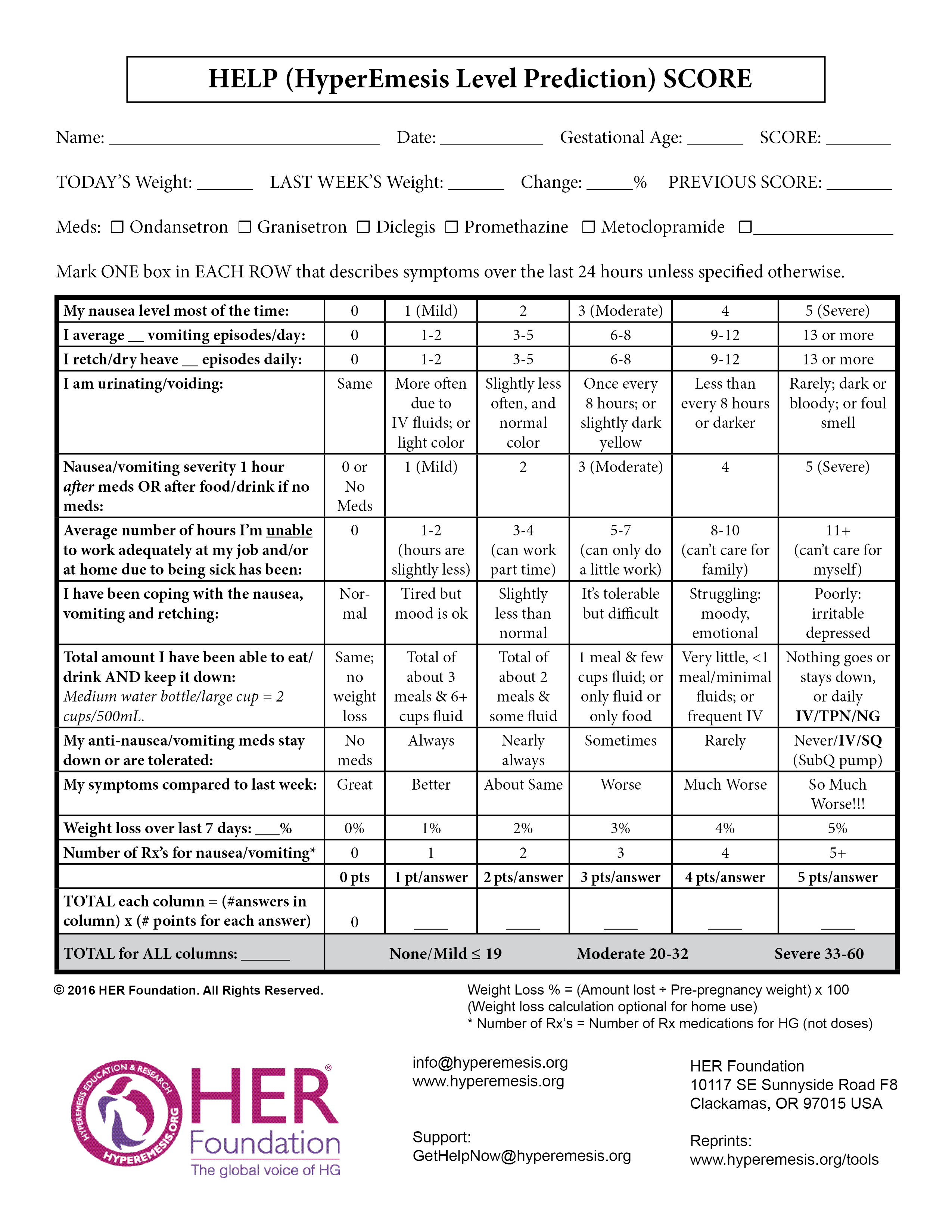
The HER Foundation’s HyperEmesis Level Prediction Score or HELP Score is a measurement tool to quantify symptom severity and helps monitor women with more complex symptomatology. Available in English and Spanish.
Using patient-friendly language, the HELP Score evaluates the severity of nausea, vomiting and retching, plus five key clinical concerns: hydration, treatment effectiveness and tolerance, psychosocial functioning, oral intake, and overall progress.
The HELP Score is based on 10 quick questions plus 2 data points. All questions except weight loss are based on the last 24 hours. Some questions have answers with both numerical values and descriptions to make quantification easier. Answers are scored from 0-5, with 0 being no symptoms or normal, and 5 indicating severe symptoms.
Layout allows quick identification of severe symptoms, which will be indicated for answers selected in the far right two columns. Trending the score over time allows more sensitive detection of changes in symptoms.
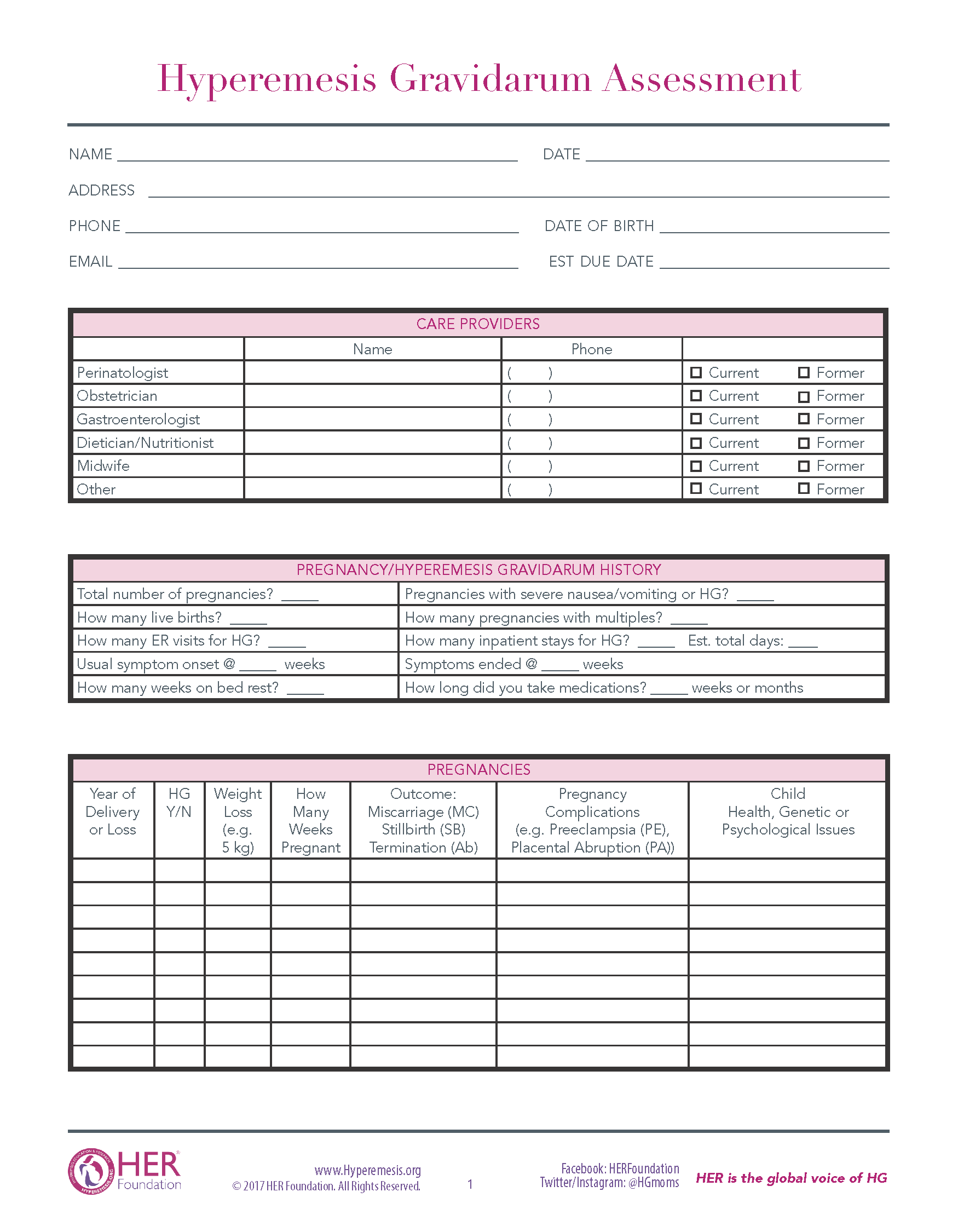
HG Assessment Packet
The HER Foundation developed a comprehensive assessment packet to promote standardized assessment of HG and improve recognition of comorbidities and developing complications. The Assessment Packet is divided into 3 parts with 1 two-sided page for each section. Page 1 is pregnancy and HG history, page 2 is their current HG symptoms and treatment assessment, and page 3 is a detailed care planning tool for efficient and comprehensive treatment of HG patients.